
Pediatric Therapy for Children With Down Syndrome: How We Support Your Child

October is Down Syndrome Awareness Month, a time to celebrate people with Down syndrome, promote inclusion, and recognize the unique strengths and abilities of every individual. At Beelieve Pediatric Therapy, we know that every child develops at their own pace. For children with Down syndrome, pediatric therapy can provide meaningful support as they build the skills they need to participate in everyday life, connect with others, and become more independent. Therapy isn't about changing who a child is. It's about helping them build skills, confidence, and independence while celebrating what makes them uniquely themselves.
How Can Pediatric Therapy Help Children With Down Syndrome?
Children with Down syndrome may experience differences in muscle tone, strength, coordination, communication, fine motor skills, feeding, and other areas of development. The type and amount of support each child needs can vary significantly.
That's why pediatric therapy should be individualized.
At Beelieve, our therapists work with families to identify meaningful goals and create therapy activities around the child's interests, strengths, and everyday routines.
Physical Therapy for Children With Down Syndrome
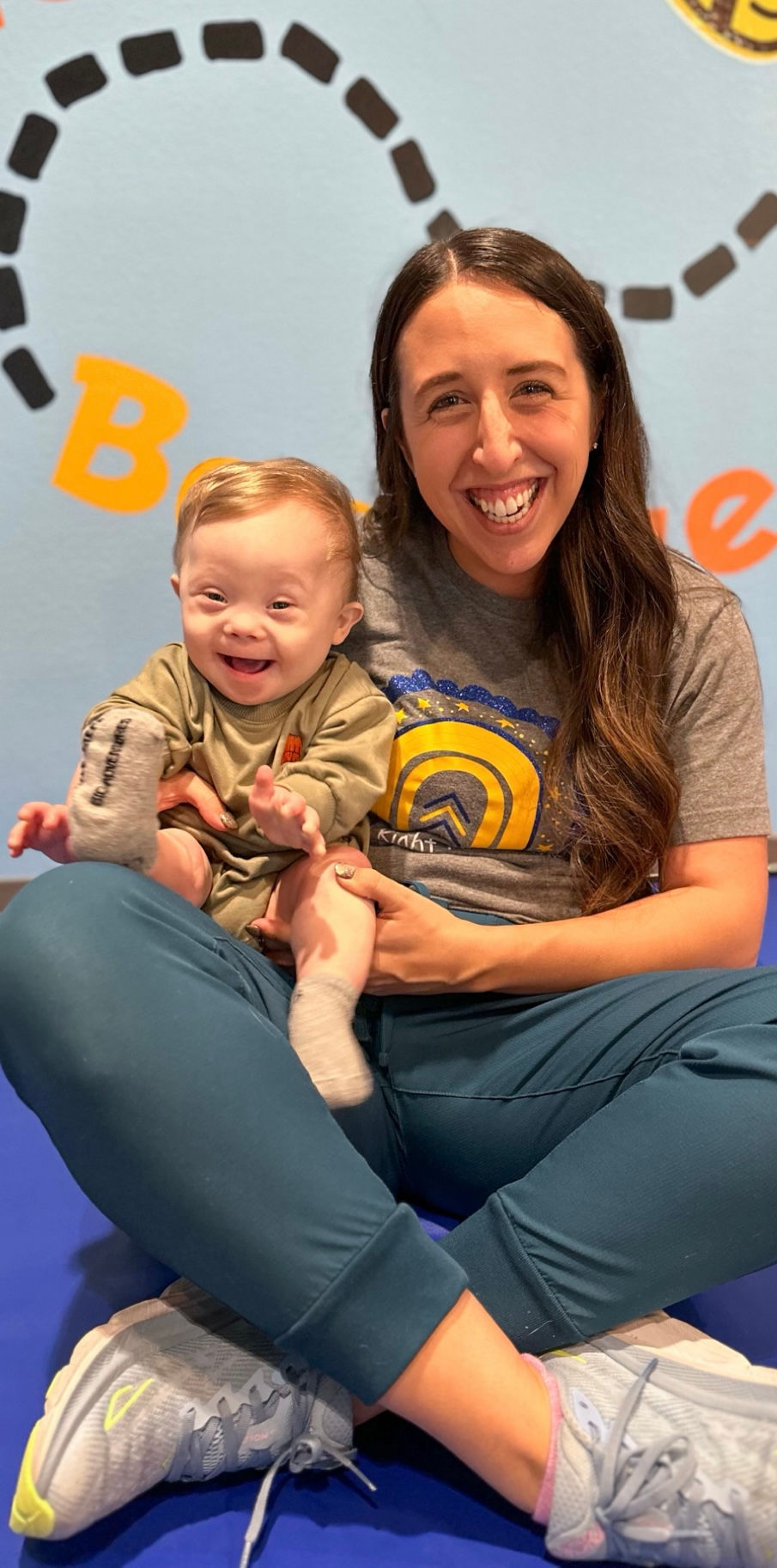
Physical therapy can support children with Down syndrome as they develop gross motor skills and build the strength and stability needed to move through their environment.
A pediatric physical therapist may work on skills such as:
Head and trunk control
Rolling and sitting
Crawling
Pulling to stand
Standing balance
Walking
Running and jumping
Stairs
Balance and coordination
Core and lower-body strength
Playground and recreational skills
Children with Down syndrome often have low muscle tone and increased joint flexibility, which can affect how they develop motor skills. PT can help children strengthen the muscles they use for movement and develop efficient, functional movement patterns.
Therapy doesn't have to feel like work! Pediatric PT often incorporates play, movement, toys, and activities that are motivating and meaningful to each child.
Occupational Therapy for Children With Down Syndrome
Occupational therapy focuses on helping children participate in the activities that make up their everyday lives.
For a child with Down syndrome, OT may address:

Fine motor skills
Hand strength and coordination
Using utensils
Dressing and undressing
Grooming and hygiene
Toileting skills
Sensory processing
Handwriting and pre-writing skills
Playing with toys
School-readiness skills
Independence with daily routines
An occupational therapist may break a challenging skill into smaller steps, modify an activity, or find a different way for a child to participate successfully.
The goal isn't perfection. It's helping children become more independent and confident in the activities that are important to them.

Speech Therapy for Children With Down Syndrome
Communication is an important part of connection and independence.
Children with Down syndrome may experience differences in speech and language development, including challenges with expressive language, receptive language, speech clarity, or using language in social situations.
A pediatric speech-language pathologist can support skills such as:
Understanding language
Using words and sentences
Expanding vocabulary
Following directions
Answering questions
Social communication
Speech sound development
Speech intelligibility
Alternative and augmentative communication (AAC), when appropriate
Speech therapy can happen through play, books, songs, routines, and everyday interactions because communication skills are most meaningful when children can use them in real life.
Feeding Therapy May Also Be Part of the Journey

Some children with Down syndrome may experience feeding challenges related to oral-motor skills, muscle tone, sensory differences, or coordination.
A pediatric feeding therapist can help address skills such as:
Chewing
Drinking
Using cups and utensils
Oral-motor coordination
Expanding food variety
Managing different textures
Mealtime participation
Feeding therapy is individualized to the child and family, with a focus on making mealtimes safer, more comfortable, and more successful.
Therapy Should Grow With Your Child
A child's therapy needs can change as they grow.
A toddler may be working on sitting, crawling, walking, feeding, or early communication. As they get older, therapy goals may shift toward dressing, handwriting, playground skills, speech clarity, school participation, or greater independence with daily routines.
That's one of the most important parts of pediatric therapy: meeting children where they are and helping them take the next step.
Celebrating Every Step Forward
Development doesn't always happen in a straight line, and progress can look different for every child. For one child, a huge accomplishment might be taking their first steps. For another, it might be communicating a want, using a spoon independently, climbing the playground stairs, or participating in a new activity. These moments are worth celebrating!
During Down Syndrome Awareness Month, we're proud to recognize the incredible children and families we have the privilege of working with. Our goal is to provide therapy that is purposeful, encouraging, and centered around the individual child. We're here to help kids BEE the best they can BEE one skill, one goal, and one milestone at a time.
If you have questions about whether pediatric physical, occupational, speech, or feeding therapy could benefit your child, our team is here to help. I’d use this version for Beelieve because it gives parents actual examples of what therapy can address rather than making the post primarily about Down syndrome itself.


Comments