
My Toddler Walks on Their Toes: Is It Normal?

Updated: Sep 26
If your toddler spends a lot of time walking on their tiptoes, you may be wondering, “Is this normal?”

Toe walking can be a common part of early walking development, especially when a child is first learning to walk. Some toddlers experiment with walking on their toes as they explore movement and figure out how their bodies work.
However, if toe walking continues, happens frequently, or is accompanied by other movement concerns, it may be worth talking with your pediatrician or a pediatric physical therapist.
What Is Toe Walking?
Toe walking is when a child walks primarily on the balls of their feet without regularly placing their heels on the ground.
Some children toe walk occasionally, while others spend most of their time walking this way.
For toddlers who are new to walking, occasional toe walking can be part of learning. As children become more experienced walkers, we typically expect to see a more consistent heel-to-toe walking pattern develop.
Why Does My Toddler Walk on Their Toes?
There isn't one single reason a child may toe walk.
They're Still Learning to Walk
When children are first learning to walk, their movement patterns can look a little different from those of experienced walkers.
They may walk on their toes when they're excited, trying to move quickly, or experimenting with different ways to balance.
It's Become a Habit
Sometimes, toe walking simply becomes a child's preferred way of moving.
If a child spends a lot of time walking on their toes, the muscles and joints involved in walking may gradually adapt to that position, making it more difficult to consistently bring the heels down.
Sensory Differences
Some children may toe walk because they enjoy the way it feels or because of differences in how they process sensory information.
Toe walking can sometimes be seen in children with sensory processing differences or developmental conditions, but toe walking by itself does not mean that a child has a developmental disorder.
Muscle Tightness or Weakness
Toe walking can sometimes be related to differences in flexibility, strength, or coordination.
For example, tightness in the calf muscles or Achilles tendon may make it difficult for a child to comfortably place their heels on the ground.
This is one reason a physical therapy evaluation can be helpful when toe walking is persistent.
Is Toe Walking Always a Concern?
Not necessarily.
Some children toe walk occasionally and still have completely typical motor development.
However, persistent toe walking is worth discussing with your child's pediatrician or a pediatric physical therapist, especially if your child:
Toe walks most of the time
Walks on their toes on both feet consistently
Has difficulty putting their heels flat on the ground
Cannot stand with their heels down
Has tight calf muscles
Frequently falls or trips
Has difficulty keeping up with other children
Has noticeable differences between the two sides of their body
Started toe walking after previously walking with their heels down
Has other concerns with their child development or movement
One-sided toe walking deserves particular attention because it may have a different underlying cause than toe walking that occurs equally on both sides.
What Can I Do at Home?
If your toddler occasionally walks on their toes, there are some simple ways to encourage different movement patterns during play.
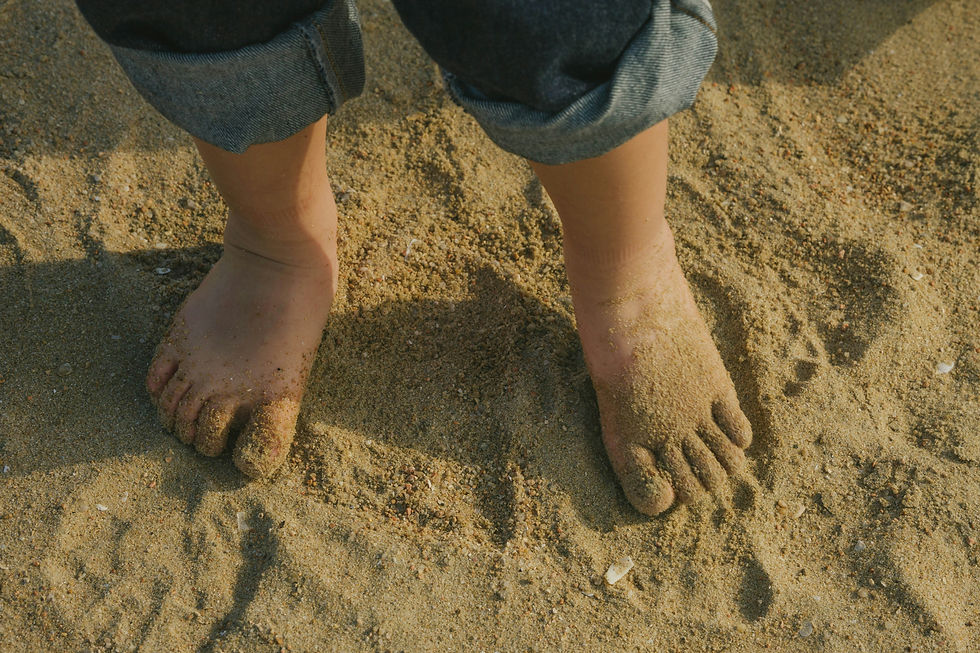
Encourage Barefoot Play
When it is safe and appropriate, allowing your child to play barefoot can give them opportunities to experience different surfaces and practice using their feet in different ways.
Play in a Squat
Squatting to pick up toys is a great way to encourage your child to bend their knees and keep their feet connected with the floor.
Try placing toys on the floor and encouraging your child to squat down to pick them up.
Encourage Heel Contact
Games that involve standing with both feet flat can help your child become more aware of their foot position.
For example, try playing with toys on a low surface where your child can stand comfortably with their heels down.

Keep Movement Fun
Running, jumping, climbing, squatting, and playing on dynamic surfaces such as pillows or couch cushions all provide opportunities to develop strength, balance, and coordination.
The goal isn't to constantly tell your child “put your heels down.” Instead, provide opportunities for varied movement and let them explore.
Should I Stretch My Toddler's Calves?
If you're concerned that your child's calf muscles are tight, talk with a pediatric physical therapist before beginning a stretching routine.
A therapist can determine whether your child actually has limited flexibility and, if so, recommend safe, age-appropriate exercises based on their individual needs.
Don't force your child's feet or ankles into a position that is uncomfortable or painful.
How Can Pediatric Physical Therapy Help?
A pediatric physical therapist can look at the bigger picture rather than focusing only on how your child walks.
An evaluation may include:
Walking and running patterns
Range of motion
Calf and ankle flexibility
Strength
Balance
Coordination
Foot and ankle alignment
Muscle tone
Overall motor development
Based on the evaluation, your child's therapist can recommend activities to help improve strength, balance, flexibility, and movement patterns.
Treatment may involve play-based exercises, balance activities, strengthening, stretching, and strategies you can incorporate into your child's everyday routines.
What If My Toddler Used to Walk Normally and Started Toe Walking?
A change in walking pattern is something to discuss with your child's pediatrician.
If your child previously walked with their heels down and then begins consistently walking on their toes, an evaluation can help determine why the change occurred.
Likewise, if toe walking is accompanied by pain, weakness, frequent falls, or other changes in movement, don't wait to seek guidance.
The Bottom Line
Occasional toe walking can be part of early walking development delay, but persistent or one-sided toe walking deserves a closer look.
If you're unsure whether your child's toe walking is typical, you don't have to figure it out on your own. A pediatric physical therapist can evaluate your child's movement, answer your questions, and help you understand what, if anything, needs to be done.
At Beelieve Pediatric Therapy, our pediatric physical therapists help children build strength, balance, coordination, and confidence so they can move through their world with greater ease.
If you're concerned about your toddler's walking pattern, we're here to help your little one BEE the best they can BEE!



Comments